Clearing out a closet, you fill three bags with clothes and decide to give them to a disaster-relief charity instead of throwing them out. It feels generous and personal — far warmer than tapping "donate" on a card form. But there's an uncomfortable truth behind a lot of well-meaning giving: the goods we're most eager to hand over are often the ones charities least need, and sorting, storing, and disposing of them can cost an organization more than it gains.
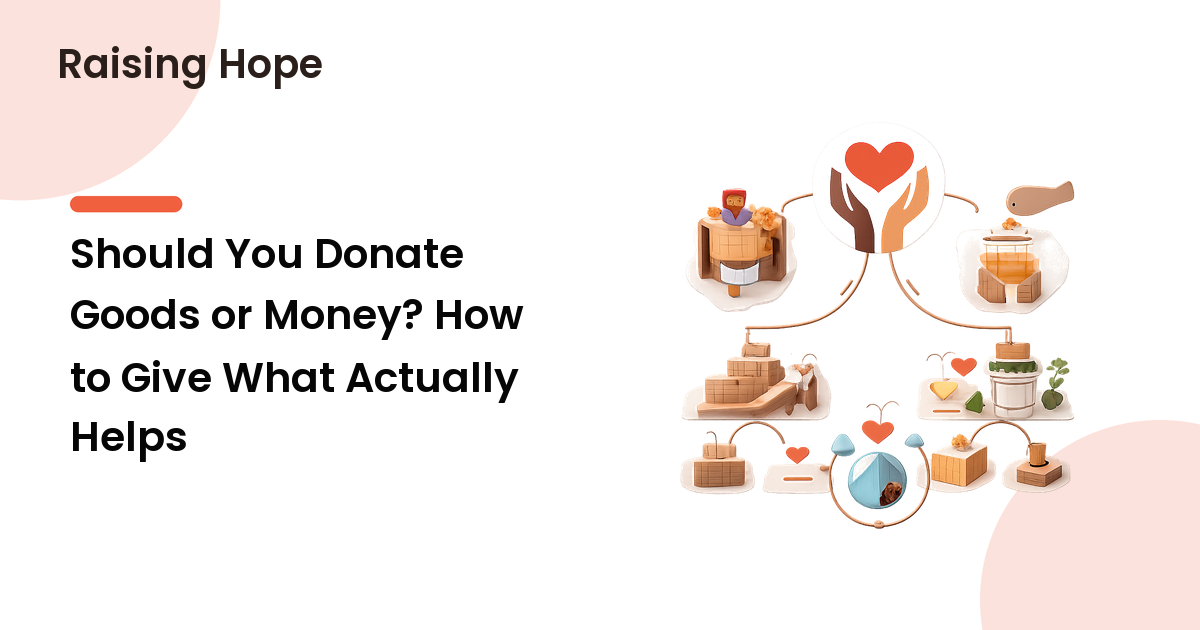
The takeaway up front: for most causes, most of the time, money helps more than goods — but in-kind donations are genuinely valuable when an organization has specifically asked for a specific item. The deciding question isn't "what do I have to give?" It's "what has someone on the ground actually requested?" Give to that request, and goods and cash are both powerful. Give to your own convenience, and even kind intentions can become a problem for the people you meant to help.
Why "stuff" can be harder to help with than it looks
A cash gift is instantly useful: a charity converts it into exactly what's needed, where and when it's needed. A physical donation has to be received, sorted, cleaned, stored, matched to a real need, and transported — and anything that doesn't fit has to be disposed of, which costs money and time. Every one of those steps is overhead you don't see.
That gap is most visible after disasters, where it has a name: the "second disaster." In the aftermath of a major flood, earthquake, or storm, donated clothing, half-used toiletries, and random household goods arrive faster than anyone can process them. Relief workers who should be helping survivors end up sorting mountains of unusable donations, while warehouses and roads clog with material nobody requested. The generosity is real; the result is a logistical burden layered on top of the emergency. None of this means goods are bad — only that they carry hidden costs worth paying when the item is genuinely wanted.
The case for giving money
Money isn't a colder or lazier gift — it's usually a more effective one, for practical reasons:
- It buys exactly what's needed. A charity knows whether the real shortage is blankets, baby formula, medicine, or rent — cash fills that gap instead of working around things they didn't ask for.
- It's far more efficient. Organizations can often buy in bulk and locally, at prices an individual can't match, which gets supplies there faster and supports the local economy rather than shipping goods across the world.
- It's flexible over time. Needs change — this week's urgent blankets may be next month's school supplies. Money follows the need; a truckload of one item can't.
This is the same logic behind judging a charity by its impact rather than a lean overhead number: the goal is help that actually reaches people. To tell whether an organization uses your money well, our guide to vetting a charity's effectiveness walks through it.
When donating goods genuinely helps
So when should you give items instead of cash? When a credible organization has specifically asked for that item, in roughly that quantity, right now. That single condition turns a guess into real help. In practice, good in-kind donations look like one of these:
- A published, current needs list. Food banks, shelters, and schools frequently post exactly what they need — specific foods, new socks and underwear, hygiene items, school supplies. Giving to a stated list is almost always welcome.
- New or genuinely good-condition items. Charities are not a disposal service for things you'd otherwise bin; if you wouldn't give it to a friend, don't give it to people in need either.
- High-value, hard-to-fund specifics. New equipment a nonprofit was about to buy, or specialized supplies it named, can be worth more than their cash value because they fill an exact gap.
- Local, ongoing, predictable needs. A food pantry that always needs canned goods, or a shelter that always needs winter blankets, can absorb steady, relevant donations because the need is constant and the logistics already exist.
The thread is the same throughout: someone who knows the need asked for the thing. Goods given against a real request are help; goods given against your own spring cleaning are a coin toss at best.
A quick decision guide
When you're unsure, run the donation through these questions:
- Has anyone actually asked for this? Check the organization's website or needs list, or simply call and ask. If it's on a current list, goods are a fine choice. If not, lean toward money.
- Is it new or in genuinely good condition? If you'd be slightly embarrassed to hand it to a friend, donate cash instead and recycle or discard the item properly.
- Can they realistically receive and use it right now? One coat to a shelter that wants coats is easy; a hundred random items dumped after a disaster is a burden.
- Would cash clearly do more here? For most emergencies and general appeals, yes — give money and let the experts buy what's needed.
Pass these and your in-kind gift will land well; stumble on any, and the kinder move is usually cash.
How to give either one well
Whichever you choose, a few habits make your gift more useful and less risky:
- Give to a credible, registered organization that can tell you what it needs and how it's used — not an unverified collector or a vague online appeal.
- For goods, follow the instructions exactly. Sort, clean, and pack as requested, label clearly, and deliver to the right place at the right time. The process is part of the gift.
- For money, prefer traceable methods — a card or an established donation platform — and keep the receipt, so the gift is safer for you and easier for the charity to account for.
- When in doubt, default to cash. It's the gift that's hardest to get wrong and easiest for a good organization to turn into real help.
FAQ
Is it better to donate money or goods to charity?
For most causes most of the time, money is more useful, because it's flexible and efficient: the organization can buy exactly what's needed, often more cheaply and locally, with almost no handling cost. A physical donation first has to be sorted, cleaned, stored, matched to a need, and transported, with anything unusable disposed of. Goods are genuinely valuable when a charity has specifically asked for that item in that quantity — so the better choice depends on whether someone on the ground requested what you're giving. If not, lean toward cash.
What should I donate after a disaster?
Usually money, to an established relief organization. After major disasters, well-meaning shipments of clothing and household goods arrive faster than relief workers can process them — the "second disaster" — pulling staff away from survivors. Unless a credible organization has publicly requested specific items, cash does far more good and creates no logistical burden.
Can donating used clothes actually be harmful?
It can be unhelpful when it's unsolicited or in poor condition. Used clothing nobody asked for becomes something a charity has to sort, store, and often discard at its own cost. Donate good-condition clothes against a stated need, and give cash otherwise.
How do I know what a charity actually needs?
Check their website or published needs list, or simply call and ask — many food banks, shelters, and schools post exactly what they need and don't need. A two-minute question before any in-kind donation, "Do you need this, and how many?", tells you immediately whether goods or money help more right now.
Next step
The next time you're moved to give, separate the gift from your own convenience. Before any donation drive or in-kind gift, ask one question — has someone actually asked for this, in this quantity, right now? If yes, your goods are real help; follow the instructions and deliver them well. If no, give money and let the people closest to the need turn it into exactly what helps. Generosity isn't measured by how personal a gift feels to you — it's measured by how much it helps the person on the other end. Give where your help lands, at addmeintopsite.com.